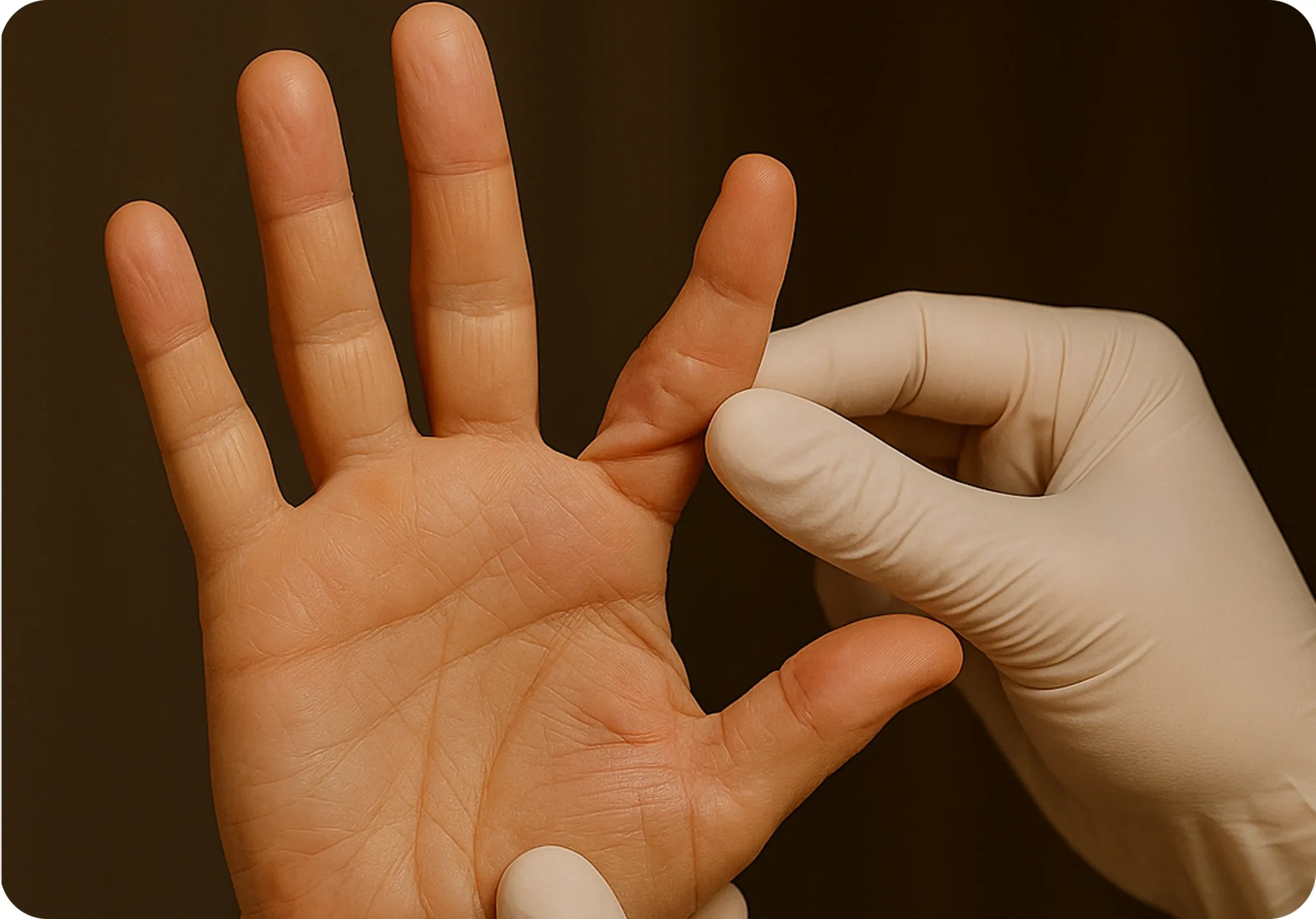
Trigger finger is a condition that may begin with mild finger pain and gradually turn into an annoying problem that interferes with daily movement. Suddenly, you may find your finger stuck in a bent position before it snaps straight like a trigger — a sensation that can be worrying for many.
This condition is not usually serious, but it can affect your ability to grip objects or perform fine tasks. In this article, we take you on a journey to understand what happens inside the hand’s tendons and why they fail to glide smoothly. You will learn about the main causes behind this issue and the signs that require early intervention.
What Is Trigger Finger?
Trigger finger is a common condition affecting the finger tendons, where the finger gets stuck in a bent position and then suddenly straightens as if a “trigger” has been released.
This occurs due to inflammation or narrowing of the tendon sheath, making it difficult for the tendon to glide smoothly inside the tight canal.
This dysfunction leads to pain during movement, morning stiffness, and sometimes a clicking sound when bending or straightening the finger. Although the condition can be bothersome, it is usually benign and easily treatable, especially with early management.
Causes of Trigger Finger
Trigger finger occurs when the tendon becomes swollen or when the surrounding sheath narrows, making it difficult for the tendon to move normally. Major causes include:
- Repetitive hand activities such as writing, sewing, manual work, or gripping tools for long periods, which put pressure on the tendons.
- Inflammation of the tendon or the surrounding sheath causing narrowing and resulting in catching or locking during movement.
- Chronic conditions such as diabetes and rheumatoid arthritis, which increase the risk of tendon inflammation and stiffness.
- It appears more commonly in people over 40, and women are more likely to develop it than men.
- A blow or acute inflammation in the hand may cause swelling that later leads to trigger finger.
Symptoms of Trigger Finger
Symptoms of trigger finger include:
- Pain at the base of the finger or thumb, which increases with pressure or movement.
- Clicking or popping sensation when bending or straightening the finger.
- Morning stiffness that gradually improves with use.
- Difficulty straightening the finger or it getting stuck in a bent position before snapping suddenly like a “trigger.”
- Swelling or a small lump at the base of the finger due to tendon inflammation.
- In advanced cases, the finger may remain stuck and cannot be straightened without help.
Complications of Neglecting Trigger Finger Treatment
Neglecting trigger finger can worsen the condition over time, leading to increased pain and stiffness, especially in the morning. With ongoing inflammation, the tendon may lose its flexibility completely, causing the finger to become permanently bent and unable to straighten without medical intervention.
The problem may also spread to other tendons in the hand due to increased pressure and improper movement. In some cases, delaying treatment can lead to the need for surgical intervention instead of simple non-surgical treatments that are most effective in early stages.
Difference Between Trigger Finger and Tendonitis
In trigger finger, the tendon sheath at the base of the finger becomes narrowed, causing the tendon to catch during movement. This leads to clicking or locking of the finger in a bent position before it suddenly straightens.
In tendonitis, the inflammation affects the tendon itself anywhere in the hand, causing continuous pain that worsens with movement — without clicking or locking.
In trigger finger, the issue is with the tendon’s passage through the tight canal, while in tendonitis, the problem lies solely in the tendon.
Treatment of Trigger Finger
Trigger finger treatment options include:
- Rest and reducing strain: Avoid repetitive hand activities or gripping heavy tools to relieve pressure on the tendon.
- Warm compresses: Help reduce inflammation and improve blood flow.
- Stretching exercises: Gentle bending and straightening of the finger to improve tendon flexibility.
- Night splint: Keeps the finger straight during sleep to reduce inflammation and allow the tendon to heal.
- Cortisone injections: An effective treatment that quickly reduces inflammation and allows the tendon to glide smoothly, especially if conservative treatment fails.
- Simple surgery: Used only in chronic or severe cases where the finger becomes stuck. It is safe, effective, and restores movement quickly.
Cortisone Injection for Trigger Finger
Cortisone injections are among the most effective treatments for trigger finger, especially in early stages or when home treatments fail. These injections reduce inflammation in the tendon sheath, allowing the tendon to glide freely inside the narrowed canal and relieving pain and stiffness.
The injection is usually administered at the base of the finger or thumb, and patients often feel noticeable improvement shortly afterward. In many cases, one injection is enough to restore normal finger movement. However, some patients may need a second injection if symptoms persist or recur.
Most Common Questions About Trigger Finger
Is trigger finger dangerous?
Trigger finger is not dangerous — it is a benign condition affecting the finger tendons and causing temporary pain or locking. But if left untreated, it may become annoying or interfere with movement, and in rare cases may require medical intervention to prevent stiffness or loss of normal finger movement.
Should you massage trigger finger?
Gentle massage can help reduce inflammation and improve tendon movement, but avoid pressing too hard. If the finger is very painful or frequently stuck, you should see a doctor.
When is surgery necessary?
Surgery is needed when the condition becomes chronic and the finger remains locked, or when all other treatments fail to restore normal movement.
Conclusion
Trigger finger is a common condition that affects the finger tendons, causing pain or temporary locking, but it is usually not serious if treated early. Home treatments, exercises, and injections when needed can reduce inflammation, restore normal movement, and decrease the need for surgery.
If you notice persistent symptoms such as swelling, severe pain, or frequent locking, consult a hand specialist to evaluate the condition and choose the most suitable treatment, as early intervention ensures faster and more effective recovery.